

Short-form content dominates much of today’s marketing landscape. Social media posts and short videos are designed to capture attention quickly and keep businesses visible online. While these formats play an important role in a modern marketing strategy, they are not a replacement for long-form content. In many cases, longer content is what gives short-form marketing its value and direction.
Long-form content helps businesses answer questions thoroughly, demonstrate expertise and provide lasting value for their audience. It also creates a stronger base for social media, email marketing and other outreach efforts. Rather than competing strategies, long-form and short-form content work best together, especially for businesses focused on lasting visibility, credibility and growth.
What Is Long-Form Content?
Long-form content includes blogs, guides, white papers, case studies, podcast transcripts and video scripts. Some businesses also use platforms such as Substack or LinkedIn to publish longer written content and thought leadership pieces. While definitions vary, long-form content generally ranges from roughly 800 to 2,000 words, though many guides and white papers extend well beyond that word count to explore topics in greater depth.
Long-form content is not defined by complexity. The goal is not to create more words, but to provide meaningful information that answers questions thoroughly and supports the audience’s decision-making process. Unlike content designed to capture attention quickly, long-form content gives businesses space to explain ideas clearly, provide context and demonstrate expertise in a way that builds trust over time.
Short-Form vs. Long-Form Content
Both types of content serve different, but equally important, roles in a strong marketing strategy. Short-form content helps businesses maintain visibility, stay active in front of their audience and encourage regular engagement through social media posts and short videos. These formats are valuable for keeping a business top of mind and creating consistent touchpoints with customers.
Long-form content provides the deeper context that supports those efforts over time. Blogs, guides and other resources give businesses the opportunity to answer deeper questions, explain services thoroughly and provide lasting value that extends beyond a single post or campaign. While short-form content often moves quickly through a feed, long-form content can continue attracting visitors through search results, answering customer questions during the decision-making process and serving as a resource that can be shared across multiple marketing channels long after it is published.
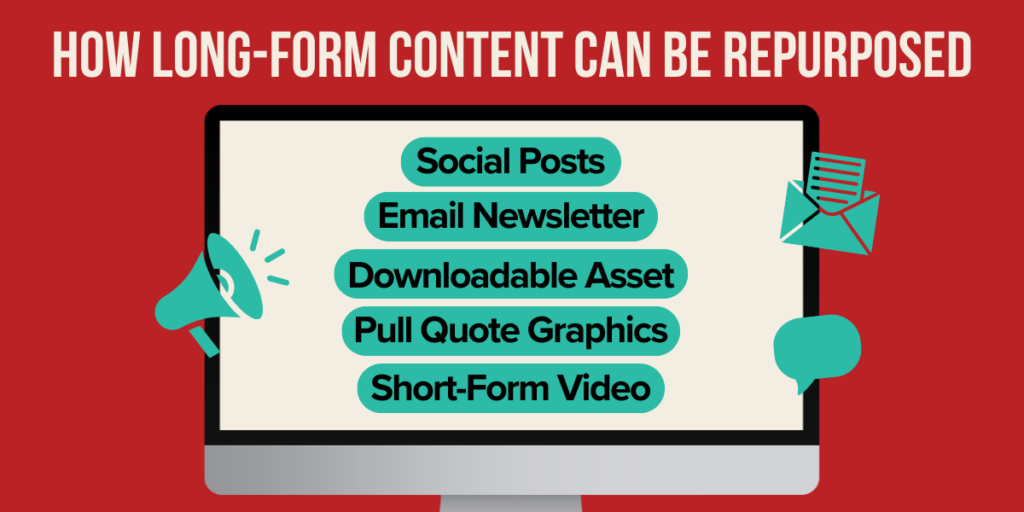
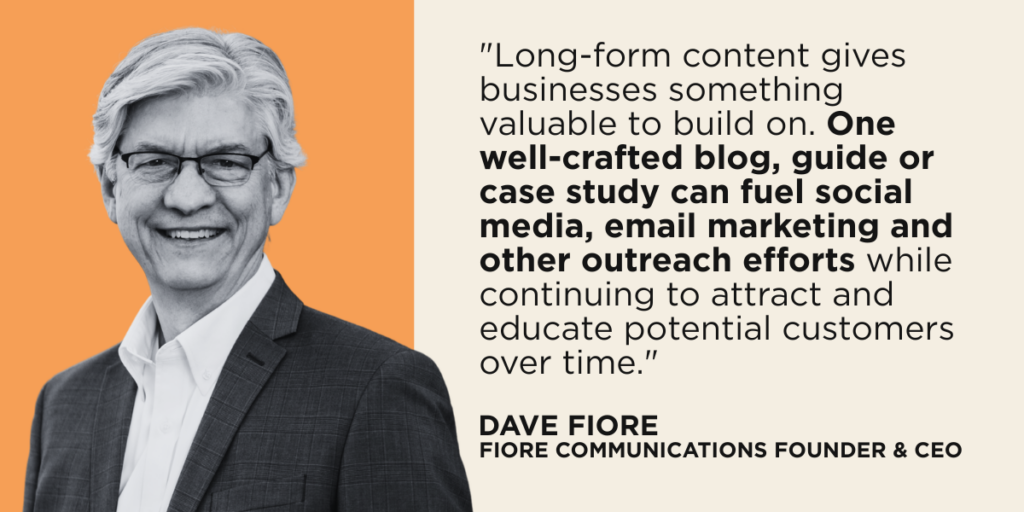
The two formats work best together. One long-form blog can provide the content for social media posts, email marketing content, graphics, pull quotes and video clips. Instead of competing strategies, short-form and long-form content complement each other and help businesses create a more balanced, sustainable approach to marketing.
Thought Leadership
Long-form content gives businesses the space to demonstrate expertise in a way that shorter content often cannot. Blogs, guides, white papers and other in-depth resources allow businesses to explain industry topics thoroughly, answer detailed questions and provide meaningful insight. Over time, this type of content positions a business as a trusted resource rather than simply another company or organization competing for attention.
Customer Relationships
Long-form content also supports stronger customer relationships by addressing questions early in the decision-making process. Many customers spend time researching before making a purchase or contacting a business, and detailed content helps guide that research with useful, relevant information. Providing value before a sales conversation begins helps establish trust and creates a stronger foundation for long-term relationships.
Owned Audience
Unlike social media platforms, long-form content published on a business website is an owned asset. Blogs, guides and other resources remain accessible regardless of changing algorithms or platform shifts. This gives businesses greater control over how information is shared, discovered and used to support long-term marketing goals. Email marketing complements these efforts by helping businesses distribute that content directly to subscribers without relying entirely on social media platforms to reach their audience.
Long-Form Content and Search
Long-form content also plays an important role in search visibility. Search engines and AI-assisted discovery tools are designed to prioritize detailed, authoritative content that thoroughly answers user questions. Blogs and guides that explore topics in depth are more likely to align with the specific phrases and questions potential customers are searching for.
This has become even more important as search behavior continues to evolve. AI-assisted search tools increasingly generate summaries and recommendations using content from trusted, comprehensive sources. A recent Semrush analysis of 89,000 LinkedIn URLs cited by AI search tools found that long-form articles accounted for 50% to 66% of cited LinkedIn content, reinforcing the value of detailed, authoritative resources in AI-assisted discovery. Brief social posts or short captions rarely provide enough depth to support this type of visibility. Long-form content, however, gives search engines and AI tools the depth and clarity they need to identify useful information and connect it to relevant searches.
For small businesses, this makes long-form content a practical, long-term investment. A single blog post can continue improving discoverability, website traffic and customer trust long after it is published.
How to Get Started
Many small businesses assume they need to publish large amounts of content to see results, but consistency is often more important than volume. The goal is to create useful resources that address customer needs and support your broader marketing efforts over time. Here are a few practical ways to start building a long-form content strategy:
- Choose one long-form format to focus on consistently, such as blogs, guides or case studies.
- Identify the questions customers ask most often before making a purchase or contacting your business.
- Create content that answers those questions clearly and thoroughly.
- Repurpose long-form content into social media posts, email marketing content and graphics.
- Review which topics generate the strongest engagement and continue building content around those interests.
In-depth content becomes even more effective when paired with a broader marketing strategy. Email marketing can help extend the reach of blogs, guides and other resources, by delivering them directly to subscribers, while consistent blogging supports visibility and long-term search performance as AI-assisted discovery evolves. Together, these approaches create a more connected and sustainable foundation for long-term marketing.
Trust the Experts
Long-form marketing is not about producing more material for the sake of volume. It is about creating useful resources that strengthen credibility, improve discoverability and help businesses build stronger customer relationships.
At Fiore Communications, we help small businesses create strategic content that supports both immediate engagement and long-term growth. From blogs and guides to integrated marketing strategies, our team develops content designed to connect with audiences and deliver measurable value over time.
Ready to build a content strategy that supports long-term visibility and business growth? Call (850) 668-0510 or contact us online to get started today.