

A consistent brand voice for small business marketing helps customers recognize your company wherever they interact with your brand. Without clear guidelines, however, the tone and perspective behind your messaging can vary from one platform to the next. Website copy may feel polished, social media may sound casual and emails may take on yet another tone. When the tone and perspective shift from one channel to another, it can make it harder for customers to understand what they can expect from your brand.
Think of it like a person’s voice. You can recognize a friend before you see them. Customers should begin to recognize your business the same way, by how it communicates, not just by its logo or other visual branding.
The good news is that defining your brand voice doesn’t have to be complicated. With a few clear guidelines, you can create consistent messaging across every channel and make your business more recognizable wherever customers find you.
What Is Brand Voice?
Brand voice is the personality behind every piece of communication your business creates. It’s not just what you say, but how you say it. The language and style you use should reflect your business’s identity and remain recognizable across your marketing.
It’s also important to understand the difference between brand voice and brand tone. Your brand voice stays consistent because it’s part of your identity. Your tone can shift depending on the situation. For example, a social media post may feel more conversational than a client proposal, but both should still sound like they came from the same company.
When your brand voice is clearly defined, every blog, email, social media post and website update becomes easier to write because your team has a shared understanding of how the business should communicate.
Start With What You Already Have
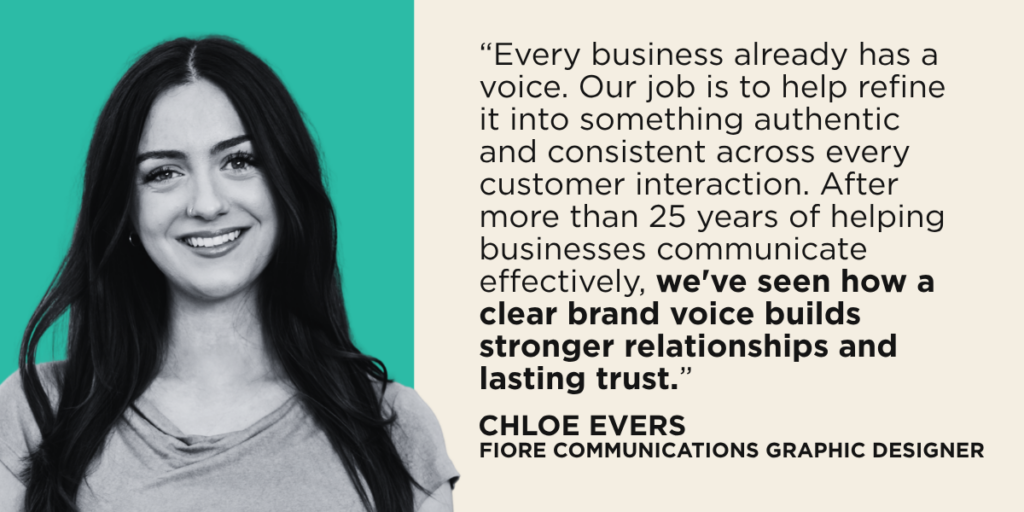
Every business already has a voice, even if it has never been formally defined. Your brand voice comes through whenever you communicate with customers. The question is whether that communication reflects a consistent personality and perspective across your marketing.
Before creating brand voice guidelines, take inventory of the content you already have. Review your website, email marketing campaigns, recent social media posts and other marketing materials side by side. Look for differences in tone, word choice and personality that could make your brand feel inconsistent.
Artificial intelligence can also help streamline this process. As we discuss in our blog about using AI in content marketing, the goal isn’t to replace your expertise. It’s to help you work more efficiently while keeping your messaging authentic. AI tools you’re already using, such as Canva’s AI features, ChatGPT, Claude and other writing assistants, can compare existing content, identify differences in tone and suggest ways to make your messaging more consistent.
Once you understand how your business communicates today, you’ll be in a better position to define the voice you want to carry across your marketing going forward.
Why Consistency Matters
Customers rarely interact with your business through just one channel. They may discover you on social media or subscribe to your email newsletter before deciding to contact you. If the tone and perspective vary too much between touchpoints, customers may have a harder time developing a clear sense of your brand’s personality. The same principle applies to your visual branding. Consistent messaging works best when it’s supported by thoughtful design choices, including typography that reflects your brand’s personality.
A consistent brand voice helps build familiarity over time. Every interaction either reinforces or weakens the way customers perceive your business. A recent systematic review of brand communication found that maintaining consistent messaging across websites, social media and email strengthens perceptions of authenticity, credibility and customer trust.
Consistency becomes even more important as your business grows. Whether content is created by multiple employees, outside partners or AI tools, clear brand voice guidelines help ensure every message reflects the same personality and values. That means less time rewriting content and more confidence that your marketing is working together instead of competing with itself.
How to Define Your Brand Voice
The strongest brand voices aren’t created by copying another company. They’re built by identifying what already makes your business unique and communicating it consistently. Customers can often tell when a business is trying too hard to sound trendy or using language that feels too formal. Authenticity is much easier to recognize and trust. For professional services businesses, such as CPAs, consultants or IT firms, this matters even more. Your brand voice isn’t just about recognition. It’s about conveying the credibility that earns a referral or converts a prospect who finds you online before they ever meet you.
Before defining your brand voice, think about who your business is at its core. For example, you might ask yourself these questions:
- What values guide your work?
- How do you want customers to feel after interacting with your business?
- If your company were having a conversation with a customer, what would that conversation sound like?
The answers to those questions provide a much stronger foundation than simply trying to match what’s popular in your industry.
Once you’ve established that foundation, identify three to five words that describe your brand voice, such as knowledgeable, approachable, confident or encouraging. Use those words as a filter for every piece of content you create. If a piece of content doesn’t sound like those characteristics, it’s a sign that it may need to be revised.
The goal isn’t to sound perfect. It’s to sound like the same business every time someone hears from you.
Build Simple Brand Voice Guidelines
Once you’ve defined your brand voice, write it down. A brand voice guide doesn’t have to be a lengthy document. For many small businesses, a single page outlining your brand’s personality, messaging and writing style is enough to create consistency across your marketing.
Start by listing three to five characteristics that define your brand voice, then include examples your team can reference. These simple guidelines make it easier for anyone creating content to communicate in a way that reflects your brand. For example, your guide might say:
- “We are approachable, not overly casual”
- “We are confident, not boastful”
- “We explain industry terms in everyday language”
This is also where AI can become a helpful editing tool. Once you’ve established your brand voice guidelines, you can use AI to review content for consistency or suggest revisions that better reflect your brand.
Remember that your brand voice guide is a living document. As your business grows, review it periodically to make sure it still reflects your company, your audience and the way you want to communicate.
Put these ideas into practice with our downloadable brand voice worksheet designed to help you define your messaging and build clear writing guidelines for your business.
Common Brand Voice Mistakes to Avoid
Even businesses with a defined brand voice can drift over time. Watching for a few common mistakes can help keep your messaging consistent.
- Trying to sound like another company. It’s tempting to mimic a competitor or a well-known brand, but customers are more likely to connect with a voice that feels genuine.
- Changing your personality to fit every trend. Marketing trends come and go, but your brand voice should remain recognizable.
- Writing differently depending on who creates the content. Whether it’s an employee, freelancer or AI tool, everyone should be working from the same brand voice guidelines.
- Using different messaging on different platforms. Your website shouldn’t sound formal if your emails are casual and your social media is full of slang. Customers should have a consistent experience no matter where they interact with your business.
- Defining your voice without considering your audience. A strong brand voice reflects both your business and your audience. Consider how your customers prefer to receive information and communicate in a way that meets their expectations.
- Creating guidelines and never revisiting them. As your business grows, review your brand voice periodically to make sure it still reflects your company’s personality and the way you want to communicate with customers.
Trust the Experts
At Fiore Communications, we help small businesses build brands that communicate with clarity and purpose. Whether you’re defining your brand voice for the first time or refining an existing marketing strategy, our team can help create messaging that reflects your business and connects with your audience.
Ready to create a brand voice that sets your business apart? Call (850) 668-0510 or contact us online to get started today.
If you’re ready to keep learning, explore the related blogs linked throughout this article, then visit the Fiore Communications website for even more resources to help strengthen your marketing.