
Email marketing remains one of the most effective ways to connect with your audience, but lasting success depends on how it is used. Rather than focusing only on sending messages, businesses need a clear approach that supports engagement, builds trust and delivers consistent value over time.
Improving list quality, establishing a consistent sending schedule and sharing relevant content all help create stronger connections and better results. Whether you are refining an existing strategy or starting from scratch, a few intentional steps can make email marketing a more effective part of your overall communications plan.
Creating Direct Customer Connections
Email marketing continues to deliver strong results because it gives businesses direct access to an audience that has already chosen to hear from them. Unlike social media platforms, where algorithms determine how and when content appears in a user’s feed, email provides a more consistent way to communicate with customers and maintain visibility over time.
Email marketing is also one of the most accessible marketing tools for small businesses. It requires a relatively low investment compared to many other channels, while still offering strong potential for engagement and long-term value. When businesses consistently share useful updates, educational content and relevant information, email marketing helps keep their brand top of mind and strengthens ongoing customer relationships.
Your Email List Is a Living Data Set
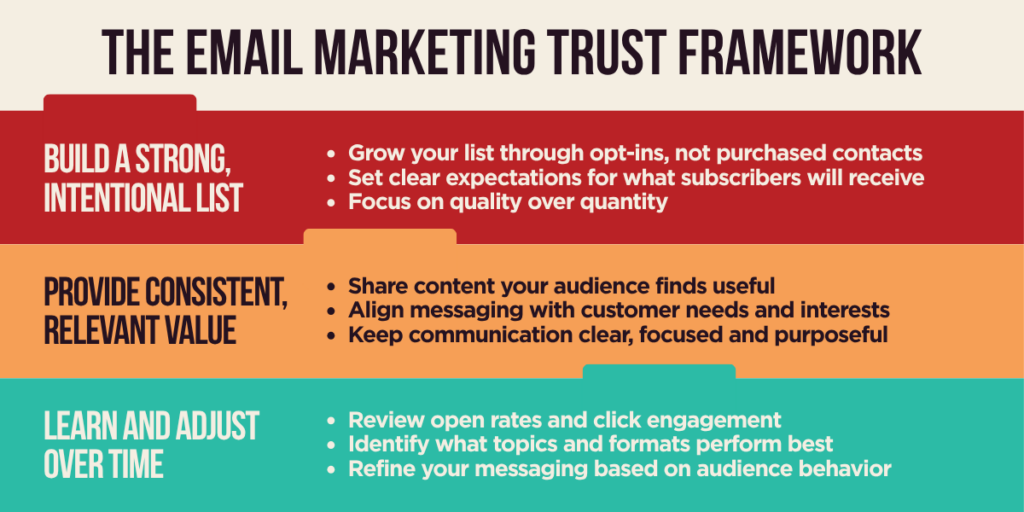
The emails on your list are more than a collection of contacts. They can provide ongoing insight into what your audience responds to and how they prefer to engage. Metrics such as open rates, click-through rates and subscriber activity help identify what content resonates most with your audience. Over time, this data helps businesses make more informed decisions about what content to prioritize and how to communicate more effectively.
Building and maintaining your list with engaged subscribers is key to making that data useful. New subscribers can come from website forms, event signups or content downloads, but attracting people who are genuinely interested in your business matters more than simply growing your list quickly.
For older lists, it is important to remove inactive contacts and reconnect with subscribers through updated content, special offers or reminder emails that encourage engagement. Keeping your list current improves deliverability and ensures your emails are reaching an audience that wants to hear from you.
List segmentation makes your email data even more valuable. Instead of sending the same message to your entire list, you can group subscribers based on interests, behaviors or past interactions. This allows you to tailor content to specific audiences, such as new subscribers, existing customers or those who have engaged with certain topics. As you review your email performance analytics, open rates and click activity can help guide your strategy, but avoid focusing too heavily on any single benchmark. Instead, focus on improving engagement over time and using those insights to refine your messaging and strategy.
Quality Matters More Than Quantity
Having a strong email list starts with how you build it, which is why businesses should never purchase email lists. Buying contacts can damage your sender reputation, reduce deliverability and even lead to restrictions or account suspension on email marketing platforms such as Mailchimp. More importantly, it puts your business in front of people who may have little interest in your content, which reduces engagement and can damage trust from the beginning.
Instead, focus on building your list through ethical, intentional methods. Invite people to subscribe through your website, events, content downloads or in-person interactions. Make it clear what they will receive and how often they will hear from you. When subscribers opt in with clear expectations, they are more likely to engage with your content and remain on your list over time.
A smaller list of engaged subscribers will consistently outperform a larger list with little interest. Prioritizing well-matched recipients leads to higher open rates, stronger engagement and better long-term results. When your list is built on trust and relevance, email marketing becomes more effective and easier to manage.
Consistency Builds Trust
Consistency plays an important role in how audiences respond to email marketing. Subscribers are more likely to stay engaged when emails arrive on a predictable schedule and provide clear value. For many small businesses, that may mean sending one or two emails each month rather than emailing only during promotions or major announcements. Establishing a steady cadence helps keep your business visible without overwhelming your audience.
Pay attention to how subscribers respond over time. Declining open rates or increased unsubscribes may indicate that emails are being sent too frequently or that the content is no longer relevant to your audience. Consistency is not about sending more emails; it is about communicating regularly enough that customers continue recognizing and engaging with your brand.
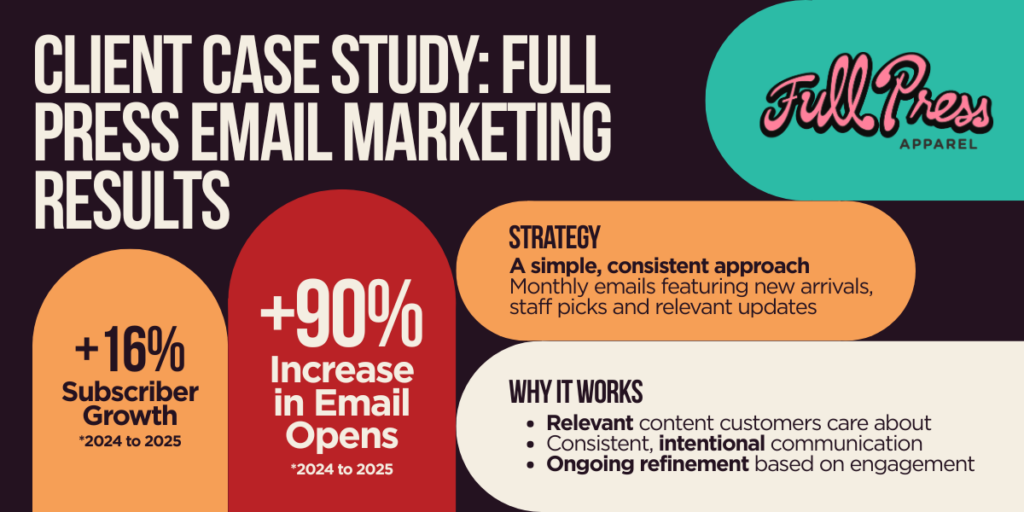
Fiore Communications helped Full Press Apparel develop an email marketing strategy centered on consistent communication and customer-focused updates. Over time, that approach contributed to strong subscriber growth and significantly increased email engagement.
Practical Email Marketing Basics for Small Businesses
A strong email marketing strategy does not require complex systems, but it does benefit from a thoughtful approach to both content and execution. Starting with a few foundational practices can help ensure your emails are clear, effective and easy for your audience to engage with.
- Create a simple automated welcome email that sets expectations and introduces your brand
- Share new blog content with your list to drive website traffic and reinforce your expertise
- Send periodic updates about your business to stay top of mind
- Highlight helpful resources or guides that provide value to your audience
- Keep messaging clear, concise and relevant to your subscribers
How your emails are structured also matters. Use links to guide readers to your website rather than embedding too much content directly in the email. This helps drive traffic and keeps your emails easy to read. Balance copy with simple visuals but avoid overloading emails with graphics that can impact load time or readability.
Using a dedicated email marketing platform is important for managing your list, tracking performance and ensuring compliance. It also allows you to test how your emails appear across different devices and email clients, which helps prevent formatting issues and improves the overall user experience.
Trust the Experts
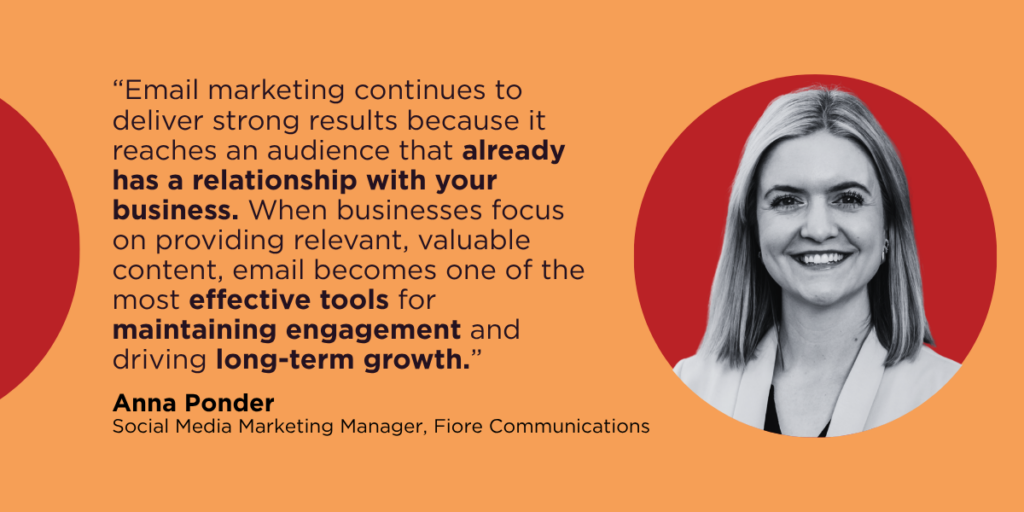
Successful email marketing doesn’t happen by accident. It is accomplished through effective strategy, consistency and connection. Hiring the right marketing agency gives your business all three. At Fiore Communications, we help businesses create email marketing strategies that keep audiences engaged and support long-term growth. From planning campaigns to developing content, our team builds email communication that reflects your brand and provides consistent value to your audience.
Ready to build a small business marketing plan? Let’s start the conversation. Call (850) 668-0510 or contact us online to get started today.