
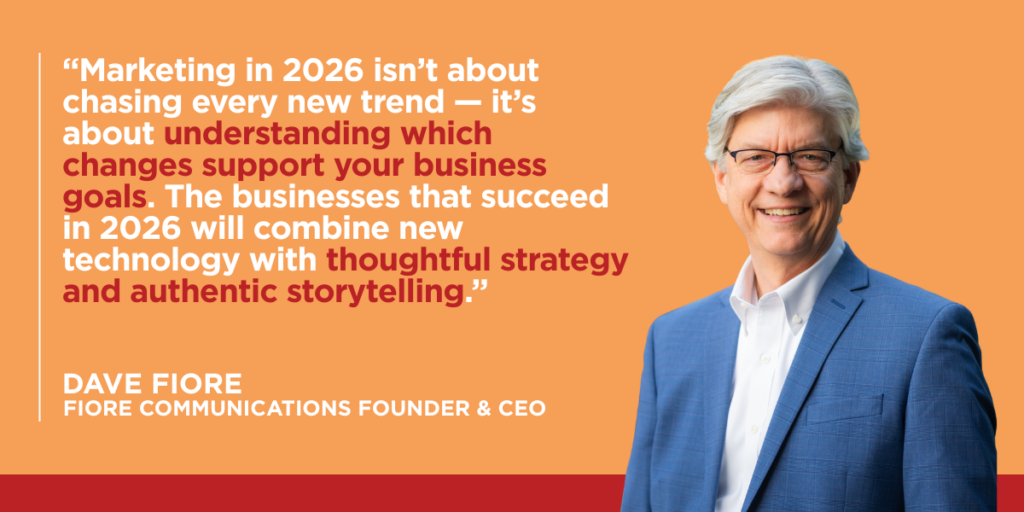
Marketing in 2026 is defined less by individual platforms and more by how channels, content and strategy connect. New tools continue to emerge, search behavior is evolving and audiences are becoming more intentional about where they place their trust. At the same time, familiar strategies such as targeted email campaigns, in-person engagement and clear brand messaging remain just as valuable as the latest marketing tools and platforms.
Businesses that combine thoughtful use of technology with consistent, human-centered communication are better positioned to build lasting relationships and stand out in a crowded landscape. The small business marketing trends shaping 2026 reflect that shift, offering opportunities to work smarter, connect more meaningfully and stay adaptable as expectations continue to rise.
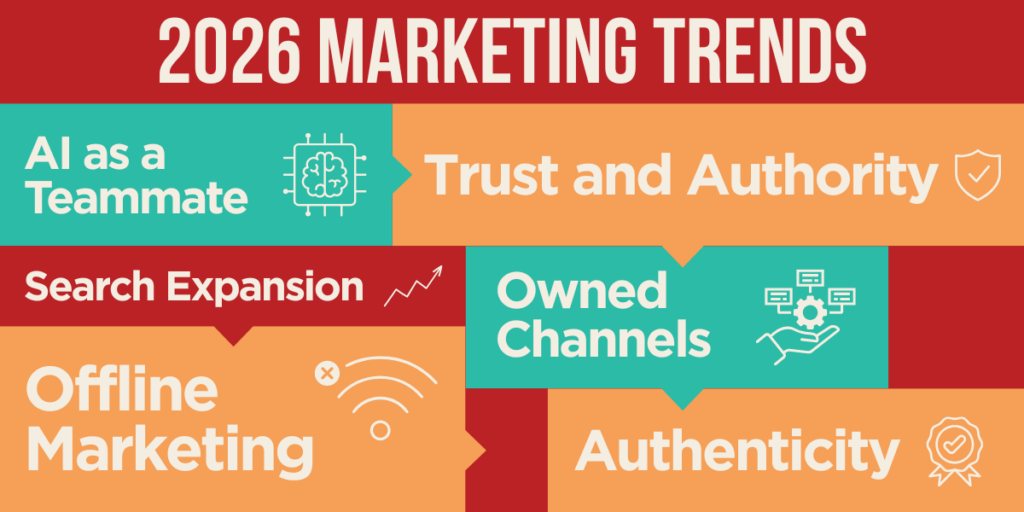
AI Becomes a Tool and Teammate
Artificial intelligence continues to shape marketing in 2026, but its role has shifted significantly in a short period of time. Rather than serving primarily as a content generator, AI is increasingly used to support workflows and decision-making. Its value lies in helping teams work more efficiently while maintaining a clear and consistent brand voice.
This shift has created new opportunities for small teams. Tasks that once required multiple roles or outside support can now be streamlined, making it easier for smaller organizations to compete with larger ones. AI can assist with organizing campaigns, analyzing performance data and testing and repurposing content more quickly, creating space for higher-level strategy without replacing the human voice that drives effective marketing.
Search Is Expanding
While search once centered almost entirely on Google results, users now look for information across a range of platforms depending on their needs, preferences and habits. Social media, video platforms and AI-assisted tools have become part of how audiences research, compare and make decisions, often before visiting a website — if they do at all.
This shift is driven largely by user behavior. Audiences want faster answers, more context and content that feels relevant to specific questions, which has driven changes in how results are delivered. As discovery becomes more distributed, businesses without a clear online presence risk being overlooked entirely. In competitive local markets, a missing or outdated website can signal lower credibility, making it harder for potential customers to find or choose a business even if it is a good match for the user’s search. Content that is clear, helpful and easy to understand across channels remains essential as search continues to evolve.
Trust Is the New Growth Hack
Consumers are increasingly selective about the brands they support. In 2026, trust is shaped less by polished messaging and more by whether a company’s values show up consistently in practice. Audiences are paying closer attention to how brands communicate, how they behave and whether those elements align across every interaction.
This shift gives an advantage to companies that lead with authenticity. Businesses that are transparent about who they are, how they operate and what they stand for are more likely to earn confidence over time. Values stand out when they are practiced, not just promoted, and consistency between messaging and action is what builds lasting trust.
Owned Channels Make a Comeback
As new platforms emerge and algorithms continue to shift, many businesses are placing renewed focus on owned marketing channels. Email lists, websites and direct communication offer more stability and security than third-party platforms that can change or disappear with little notice. In a changing landscape, owned channels reduce the risk of losing access to established audiences.
That stability, however, comes with higher expectations. Consumers are more selective about what they engage with, which means owned channels must consistently deliver value. As trends and shiny new platforms come and go, the foundational strength of owned channels continues to prove valuable, especially for businesses that prioritize relevance, clarity and long-term relationships over short-term reach.
Offline Marketing Is Having a Strategic Moment
Offline marketing is regaining attention for its ability to create tangible and memorable experiences. In-person events, community partnerships, print materials and local sponsorships offer opportunities for connection that feel more personal than many digital touchpoints. Because these interactions happen in real time and real spaces, they often leave a stronger and more lasting impression.
Offline marketing stands out because it creates personal and memorable interactions that digital efforts cannot fully replicate. A well-executed event, thoughtful print piece or meaningful local partnership can help brands move from being noticed to being remembered. When designed to work alongside digital strategy, offline efforts create continuity across channels and reinforce brand presence in ways that extend beyond the screen.
Authenticity Is a Priority
Audiences are gravitating toward content that feels relaxed and unscripted. Highly scripted campaigns are giving way to formats that highlight real moments, everyday work in progress and informal interaction. This trend is especially visible on social platforms, where quick behind-the-scenes clips, candid updates and day-in-the-life snippets often outperform more polished creative content.
As this shift continues, brands are placing more emphasis on showing the teams behind their work. Content that features staff members, collaborative moments or genuine interactions offers a clearer sense of how a brand operates. These glimpses build familiarity and help engagement feel more natural and less transactional, especially when the focus is on real work rather than curated presentation.
How to Choose the Right Content for Your Business
With so many marketing options available, choosing what to prioritize requires more than following small business marketing trends. The most effective content decisions are grounded in clear goals, realistic expectations and an understanding of how success is measured over time. Before investing in a new format or channel, these four considerations can help guide smarter and more sustainable choices.
Impact
Consider whether the content has the potential to support meaningful business outcomes. Impact is not just about reach or awareness but whether an effort can realistically contribute to leads, sales or customer retention. Content that aligns with business objectives is more valuable than content that simply attracts attention.
Effort
Time and cost matter. Some content formats require ongoing production, specialized skills or paid support to be effective. Evaluating the level of effort involved helps ensure that marketing initiatives are sustainable and do not pull resources away from higher-priority work.
Fit
Content should match how your audience prefers to engage. Understanding audience behavior, interests and expectations makes it easier to choose formats that feel natural rather than forced. When content aligns with how audiences already consume information, it is more likely to resonate and perform over time.
Proof
Measurement looks different depending on the channel. While some tactics offer clear short-term indicators, others such as SEO and social media are long-term investments. Rather than focusing on viral moments or surface-level metrics, businesses benefit from tracking trends over time and evaluating how content supports broader goals such as visibility, engagement quality and relationship building.
When Trends Point to a Bigger Strategic Shift
As small business marketing trends expand across more formats and platforms, solving challenges often requires more than adding new tactics. When efforts begin to feel fragmented or difficult to manage internally, it may be a sign that a more strategic approach is needed. For some businesses, this is the point where working with a marketing agency can help turn trends into a cohesive plan that supports long-term goals rather than reactive decisions.
Download our guide to find out if it’s the right time for your business to invest in hiring a marketing agency.
Trust the Experts
Successful marketing doesn’t happen by accident. It is accomplished through effective strategy, consistency and connection. Hiring the right marketing agency gives your business all three. At Fiore Communications, we believe that understanding how marketing aligns with your business goals should not be a mystery, so we provide measurable results that demonstrate in real-life terms how our ideas and strategies help our clients achieve success in whatever is most important to them.
Ready to build a small business marketing plan? Let’s start the conversation. Call (850) 668-0510 or contact us online to get started today.