

The marketplace is crowded with smart, successful people, and everyone on your LinkedIn feed seems to be creating inspirational, innovative content. Whether you’re a small-business owner, nonprofit leader or professional trying to carve out your place, it’s not enough to simply offer great products and services anymore. Your customers and peers want more; they want to know who they’re working with, what you stand for and why they should trust you.
Thought leadership bridges the gap between marketing and trust. By positioning yourself as a recognizable expert and trusted voice in your industry, you build credibility that goes beyond transactions. Thought leadership combines industry knowledge, personal brand and authentic engagement, transforming your insights into a door-opening reputation. If you’ve ever read an article on LinkedIn that changed how you think about your industry or heard a local business leader speak at an event and thought, “Wow, they really know their stuff,” then you’ve seen thought leadership in action.
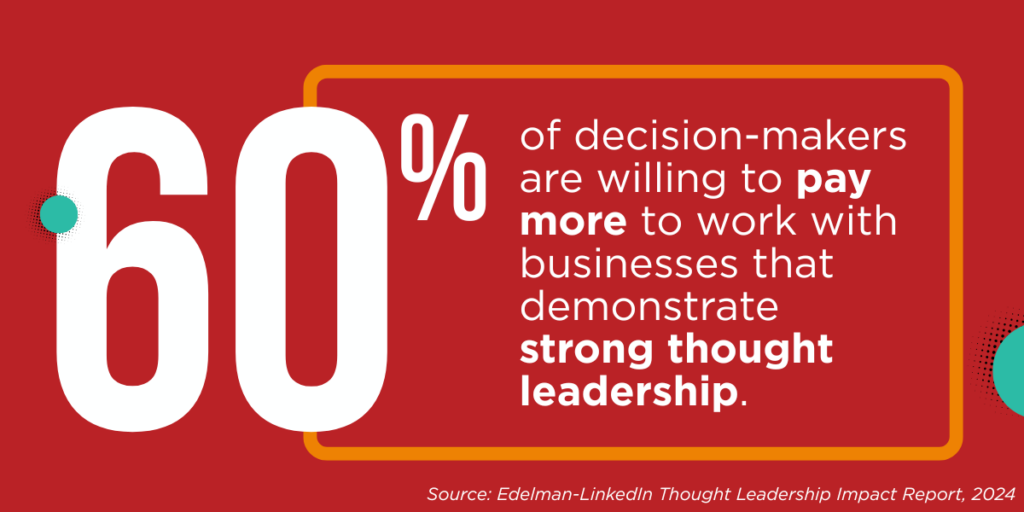
Research supports the impact of thought leadership. According to recent studies:
- 69% of professionals agree that thought leadership is an effective tool for engaging employees and strengthening culture in the workplace.
- 63% of buyers say thought leadership proves an organization truly understands their business challenges.
- 53% of buyers say thought leadership is essential for a small or new business trying to compete with established industry players.
Why Thought Leadership Matters
In today’s digital-first environment, buyers and clients are cautious. They are inundated with marketing messages and not-so-subtle pitches, making it harder for any individual business to stand out. What cuts through this noise is authority and trust.
Imagine two small accounting firms in the same city. One relies primarily on word-of-mouth marketing and a basic, brochure-style website. The other publishes monthly blog posts regarding tax law changes, shares short explainer videos on LinkedIn and speaks at chamber of commerce luncheons about financial planning. A business owner will likely trust the second firm more when the time comes to choose an accountant, not because their services are necessarily better but because their expertise is visible.
That visibility is the true power of thought leadership. It builds brand recognition, improves customer trust and sets you apart from competitors in an oversaturated market.
Building Authority as a Thought Leader
Authority doesn’t happen overnight; it comes from a consistent combination of showing up, providing value and being willing to share your knowledge. Here are four foundational ways to start building authority and examples of how you can apply them in your business today.
1. Share What You Know
- Start small and practical. If you own a landscaping company, write a blog post or LinkedIn article about the top low-maintenance plants for homeowners in your region. If you run a nonprofit, share lessons learned from a past fundraising event.
- You don’t have to have all the answers, just the experience and perspective to help others. What matters is that your audience sees you as someone with real-world knowledge who’s willing to share it with their community.
2. Speak to Your Community
- Look for opportunities to put yourself in front of people in your industry, both in person and online. A local chamber of commerce breakfast is a great starting point. Volunteering to lead a session or host a panel discussion immediately positions you as a trusted expert in your field.
- The goal is not to sell services on the spot but to build a reputation as someone who is approachable, knowledgeable and community minded. A financial advisor might host a free lunch-and-learn for local business owners on preparing for tax season.
3. Collaborate with Peers
- Thought leadership grows exponentially when you work with others. Reach out to colleagues in your industry or related fields and explore partnership opportunities. For example, a local marketing consultant could partner with a web developer to co-author a blog post about website mistakes that kill marketing campaigns.
- Both professionals benefit from the collaboration and expand their reach to one another’s networks/audiences.
4. Maintain Authenticity
- Audiences can spot self-promotion from a mile away. Don’t focus on making yourself or your business the hero of your story, instead focus on helping others. Share stories, be open about hard lessons and let your personality shine. It helps to give audiences a glimpse into your professional mindset and the culture at your company.
- Instead of posting about finishing another successful project, try sharing a story about navigating a supply chain issue. That shift makes your content genuinely useful to other business owners rather than being entirely promotional.
Practical Ways to Become a Thought Leader
Once you’ve laid a good foundation, it’s time to put your expertise into action. Thought leadership grows through a mix of offline networking and online visibility. Here’s how to get started on both.
In-Person Networking
Even in a digital-first environment, face-to-face interaction builds trust and relationship in important ways not possible over the internet. Maximize your local networking with these practical tips.
- Consistently Attend Local Networking Events: Don’t just show up once. Make a habit of attending business or civic events or join a trade association, service club or professional organization. When people see you regularly, they are more likely to be interested in and trust what you have to say.
- Focus on Relationship Building: Instead of handing out as many business cards as possible, focus on having a few meaningful conversations. Ask about the other person’s challenges and think about ways you might be able to help, whether by sharing advice, recommending resources or introducing them to someone else in your network.
- Offer Expertise Proactively: Look for opportunities to lead workshops, sit on panels or mentor young professionals. If you’re a restaurateur, teach a class on menu planning. If you’re in HR, lead a session on workplace culture. These opportunities position you as someone people can trust for guidance.
Online Networking
Your online presence can multiply the impact of these in-person efforts. Here’s how to use digital tools to create thought leadership platforms.
- Optimize LinkedIn: Update your LinkedIn profile to reflect not just your job title but your expertise. Use your headline to position yourself (“helping small businesses streamline their finances” is better than “accountant”). Post regularly with short, practical insights and stories that show your extensive knowledge.
- Create Original Content: Write articles or blog posts that answer common client questions, record videos explaining industry updates/news or share infographics with helpful data. For example, a construction company may publish a blog on insider tips a homeowner should know before pursuing a remodel.
- Leverage Visual Storytelling: Visuals make content more interesting. Repurpose part of a blog post as an infographic, record a 60-second tip video or share photos from a recent event with a well-contextualized caption.
- Showcase Proof of Expertise: Dive into long-form content. Publish case studies that demonstrate how you solved a client problem or share testimonials that highlight your company’s unique strengths. These real-life examples can carry more weight to audiences than generic claims.
- Engage Authentically: Don’t just post, interact. Comment on peers’ content with thoughtful insights, share articles with your own takeaways and join conversations in industry groups. Over time, people will recognize your/your company’s name and associate it with real value.
Thought Leadership as a Long-Term Strategy
It is important to remember that thought leadership isn’t built overnight. It’s not based on a viral post or a single speaking engagement, it’s a long-term, consistent strategy.
Think of each effort (writing a blog, attending an event, posting on LinkedIn) as planting a seed. On its own, a seed doesn’t seem like much, but with care and consistency, it will grow into something stable, visible and lasting.
Business owners who commit to becoming a thought leader often see benefits they didn’t anticipate including stronger partnerships, improved employee engagement, more referrals and even media opportunities. When you focus on being helpful and authentic, the business opportunities will follow.
Key Takeaways
Feeling overwhelmed? The good news is you don’t have to do everything all at once. Here are some small actionable steps you can take this month to start your thought leadership journey.
- Attend one local networking event and have two meaningful conversations.
- Update your LinkedIn profile to reflect your expertise and professional goals.
- Write one blog post or LinkedIn article answering a common client or customer question.
- Reach out to a peer in your industry for a coffee chat or collaboration idea.
Expand Your Impact
Every step builds momentum. Over time, these small actions will establish your reputation as a trusted voice in your field.
At Fiore Communications, we specialize in helping business owners turn their expertise into content that connects. Whether you need help creating blogs, newsletters or social media strategies, our team can help you amplify your voice and grow your influence. If you’re ready to explore thought leadership as part of your business strategy, let’s talk.